, Nucleic Acid Research, 47, 10788, 2019, [link]
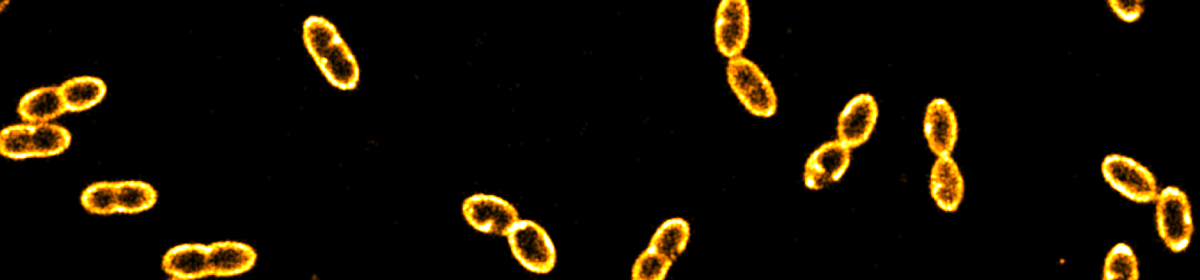
DNA-binding proteins utilise different recognition mechanisms to locate their DNA targets; some proteins recognise specific DNA sequences, while others interact with specific DNA structures. While sequence-specific DNA binding has been studied extensively, structure-specific recognition mechanisms remain unclear. Here, we study structure-specific DNA recognition by examining the structure and dynamics of DNA polymerase I Klenow Fragment (Pol) substrates both alone and in DNA–Pol complexes. Using a docking approach based on a network of 73 distances collected using single-molecule FRET, we determined a novel solution structure of the single-nucleotide-gapped DNA–Pol binary complex. The structure resembled existing crystal structures with regards to the downstream primer-template DNA substrate, and revealed a previously unobserved sharp bend (∼120°) in the DNA substrate; this pronounced bend was present in living cells. MD simulations and single-molecule assays also revealed that 4–5 nt of downstream gap-proximal DNA are unwound in the binary complex. Further, experiments and coarse-grained modelling showed the substrate alone frequently adopts bent conformations with 1–2 nt fraying around the gap, suggesting a mechanism wherein Pol recognises a pre-bent, partially-melted conformation of gapped DNA. We propose a general mechanism for substrate recognition by structure-specific enzymes driven by protein sensing of the conformational dynamics of their DNA substrates.

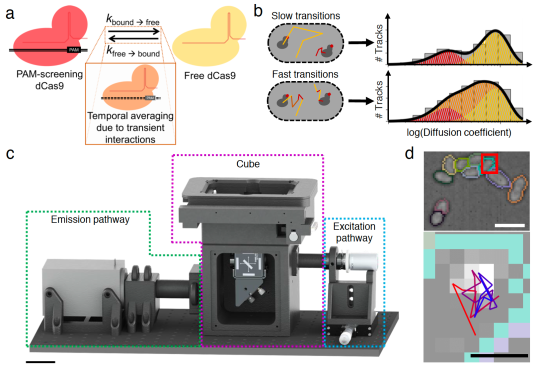
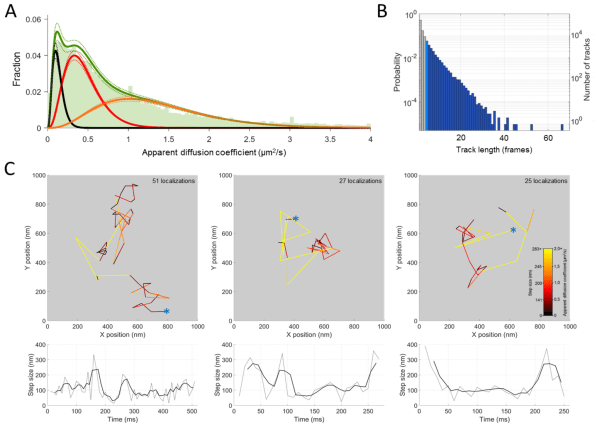

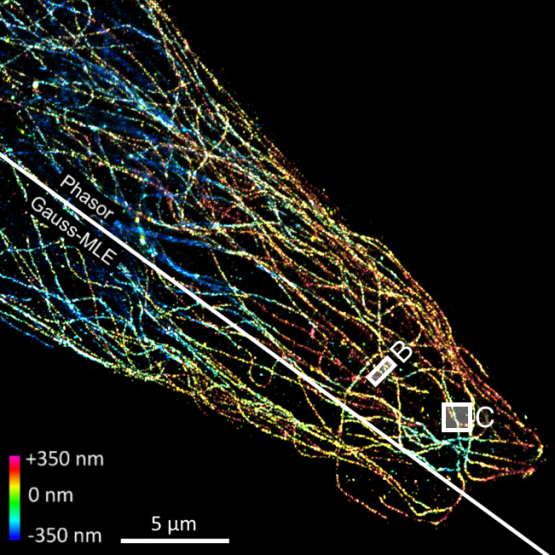


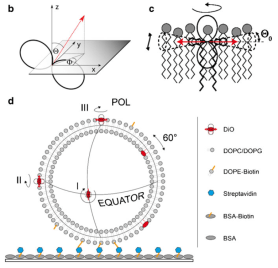 he method is based on the detection of single photons, it additionally allows for performing fluorescence correlation spectroscopy (FCS) as well as dynamical anisotropy measurements thereby providing access to fast orientational dynamics down to the nanosecond time scale. The 3D orientation is particularly interesting in non-isotropic environments such as lipid membranes, which are of great importance in biology. We used giant unilamellar vesicles (GUVs) labeled with fluorescent dyes down to a single molecule concentration as a model system for both, assessing the robustness of the orientation determination at different timescales and quantifying the associated errors. The vesicles provide a well-defined spherical surface, thus, the in cooperation of lipid dyes (DiO) represents a a wide range of dipole orientations. To complement our experimental data, we performed Monte Carlo simulations of the rotational dynamics of dipoles incorporated into lipid membranes. Our study offers a comprehensive view on the dye orientation behavior in a lipid membrane with high spatiotemporal resolution representing a six-dimensional fluorescence detection approach.
  Hohlbein lab